
Best Indoor Infrared Saunas Australia (2026) | Home Sauna Buying Guide
In this guide
Indoor infrared saunas are one of the fastest-growing home wellness purchases in Australia. They fit into a spare room, garage or home gym, heat up quickly and, in most cases, run from a standard power point.
This guide covers what to look for, how the main heater types compare, what infrared saunas cost in Australia, and how to choose the right size for your home.
What Is an Infrared Sauna?
A traditional sauna heats the air with a heater and stones. An infrared sauna uses infrared panels to warm your body more directly, so it feels intense at a lower air temperature: typically around 40–60°C, compared with 70–100°C in a traditional sauna.
That makes infrared well suited to:
- Regular, everyday use at home
- Indoor rooms and smaller spaces
- Lower running costs
- Shorter warm-up times
What Makes a Good Indoor Infrared Sauna?
- Heater type: carbon panels, full spectrum, or a combination
- Size: from compact 1 person cabins to 3–4 person models
- Build quality: timber, glass, joinery and finish
- Electrical requirements: plug-in versus hardwired
- Everyday usability: controls, lighting, audio and bench comfort
For most Australian homes, a well-built compact cabin that is easy to use every day beats a larger one that rarely gets switched on.
The KOVE Full Spectrum Infrared Range
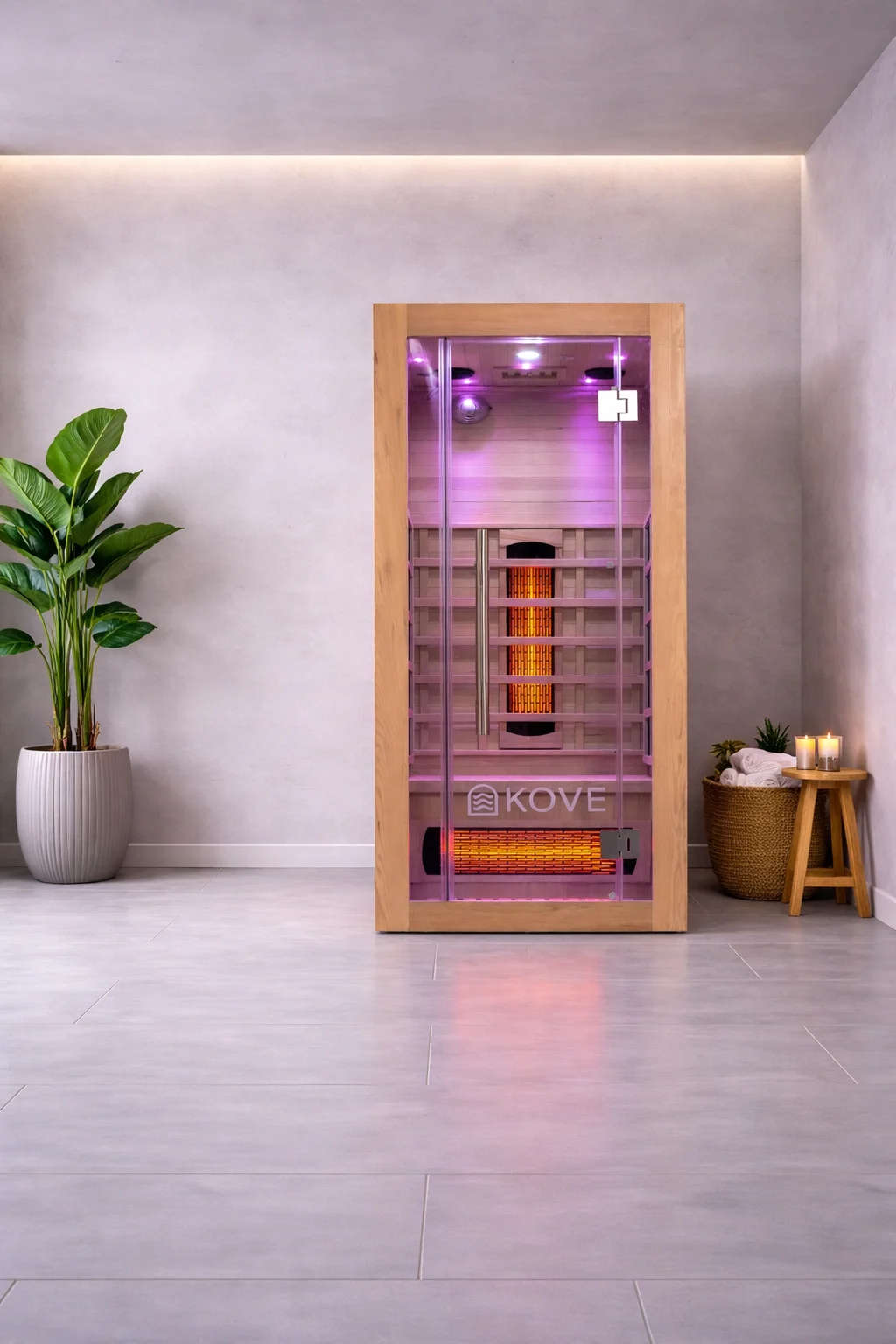
KOVE indoor saunas use full spectrum infrared heating in a timber cabin with a glass front and Bluetooth audio, in three sizes:
| Model | Best for | Price |
|---|---|---|
| Full Spectrum Infrared Sauna – 1 Person | Solo use, apartments and spare rooms | $2,399.99 |
| Full Spectrum Infrared Sauna – 2 Person | Couples and most homes | $2,799.99 |
| Full Spectrum Infrared Sauna – 3 Person | Families and shared use | $3,199.99 |
Prices are correct at the time of writing and may change; see each product page for current pricing.
View the full KOVE indoor infrared range
How the Market Compares
Indoor infrared saunas sold in Australia broadly fall into three groups:
- Budget marketplace cabins: lower upfront prices, but heater quality, build quality and after-sales support vary widely.
- Specialist mid-range brands: where KOVE sits, with solid construction, full spectrum heating and local support at a realistic price.
- Premium imported brands: high-end finishes, certifications and showroom experiences, usually at a considerably higher price.
| Category | Price | Best for |
|---|---|---|
| Budget marketplace | $ | Occasional use, tight budgets |
| KOVE | $$ | Regular use at home |
| Premium imported | $$$$ | Design-led, high-budget projects |
Full Spectrum vs Carbon Infrared
Carbon heaters
- Large panels with even, gentle heat
- Lower surface temperatures
- Common in entry-level and mid-range cabins
Full spectrum heaters
- Combine near, mid and far infrared
- A more intense feel at similar air temperatures
- Usually found in higher-specified cabins
Both work well. Full spectrum suits people who want a stronger session; carbon suits those who prefer gentle, even warmth.
What Does an Indoor Infrared Sauna Cost in Australia?
Price depends on size, heater type and build quality. Small budget cabins can be found for around a thousand dollars, quality 1–3 person cabins commonly sit in the $2,000–$4,000 range, and premium brands can cost considerably more. KOVE’s range runs from $2,399.99 to $3,199.99.
Running costs are modest; see our guide to how much a sauna costs to run in Australia.
Power Requirements in Australian Homes
Most smaller infrared cabins run from a standard 10A power point, while larger cabins may need a 15A outlet or a dedicated circuit. Check the rated power of the model you are considering, avoid extension leads and power boards, and ask a licensed electrician if you are unsure about your circuit.
How to Choose the Right Size
- 1 person: compact, efficient and easiest to fit
- 2 person: the most popular choice for Australian homes
- 3 person: family or shared use
Also check ceiling height, access through doorways for the panels, and where your nearest suitable power point is.
Final Thoughts
The best indoor infrared sauna is the one that fits your space and gets used. Choose a well-built cabin, check your power supply, and put it somewhere you will walk past every day.
Planning your setup?
Our Australian team can help you choose the right equipment for your space, power supply and routine, and answer anything this guide didn't cover.
How to Build a Cube Sauna: Complete Installation Guide
A KOVE cube sauna is designed for straightforward assembly by a capable homeowner or local handyman, with a licensed electrician connecting the…
How Much Does a Sauna Cost to Run in Australia?
How much electricity does a home sauna use in Australia? Example running costs for infrared, barrel and cube saunas at Australian power…
Sauna Before Bed: Can Evening Heat Therapy Improve Sleep?
Long workdays, screens and warm summer nights don’t make sleep easy, which is part of why evening sauna sessions have become popular…